
Not for profit · Free to join · From the book Average
Record what you know, in your own voice, before it is lost.
Saving seed. Tanning a hide. Reading the weather. Keeping an old machine running. Most of what people know was never written down, and none of it is in ChatGPT. Citadel records it in your own voice, keeps it in your name, and no AI company can use it without your permission.
“What do you know that would be lost if you were gone?”

Answer questions
Answer questions out loud and Citadel writes down what you know.
Press the button and answer out loud. Citadel listens, writes it down and asks the next question from what you just said: tell it how you save tomato seed and it asks when you last fermented a batch. One question at a time, until the reasoning behind what you know is down.
Other ways in
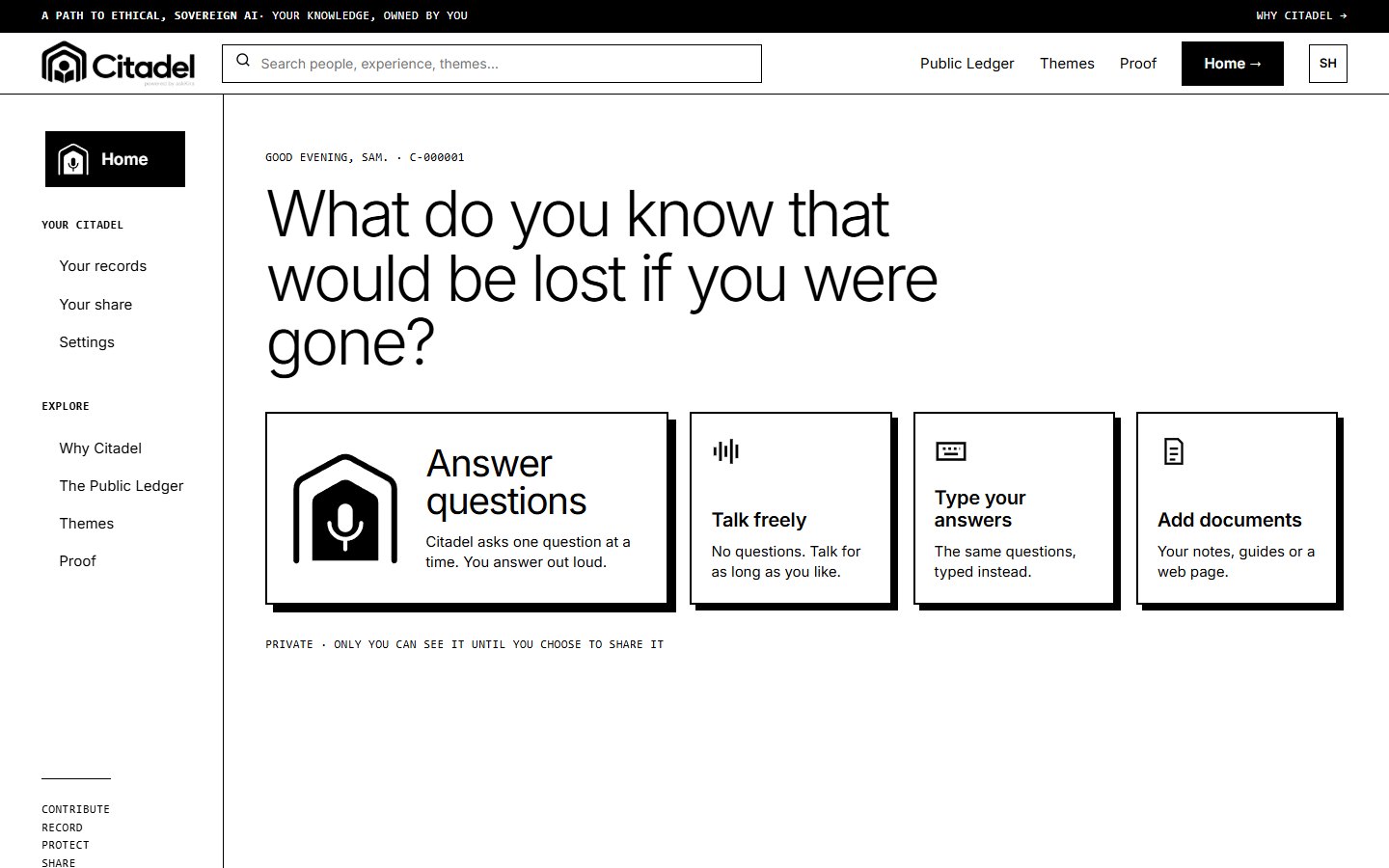
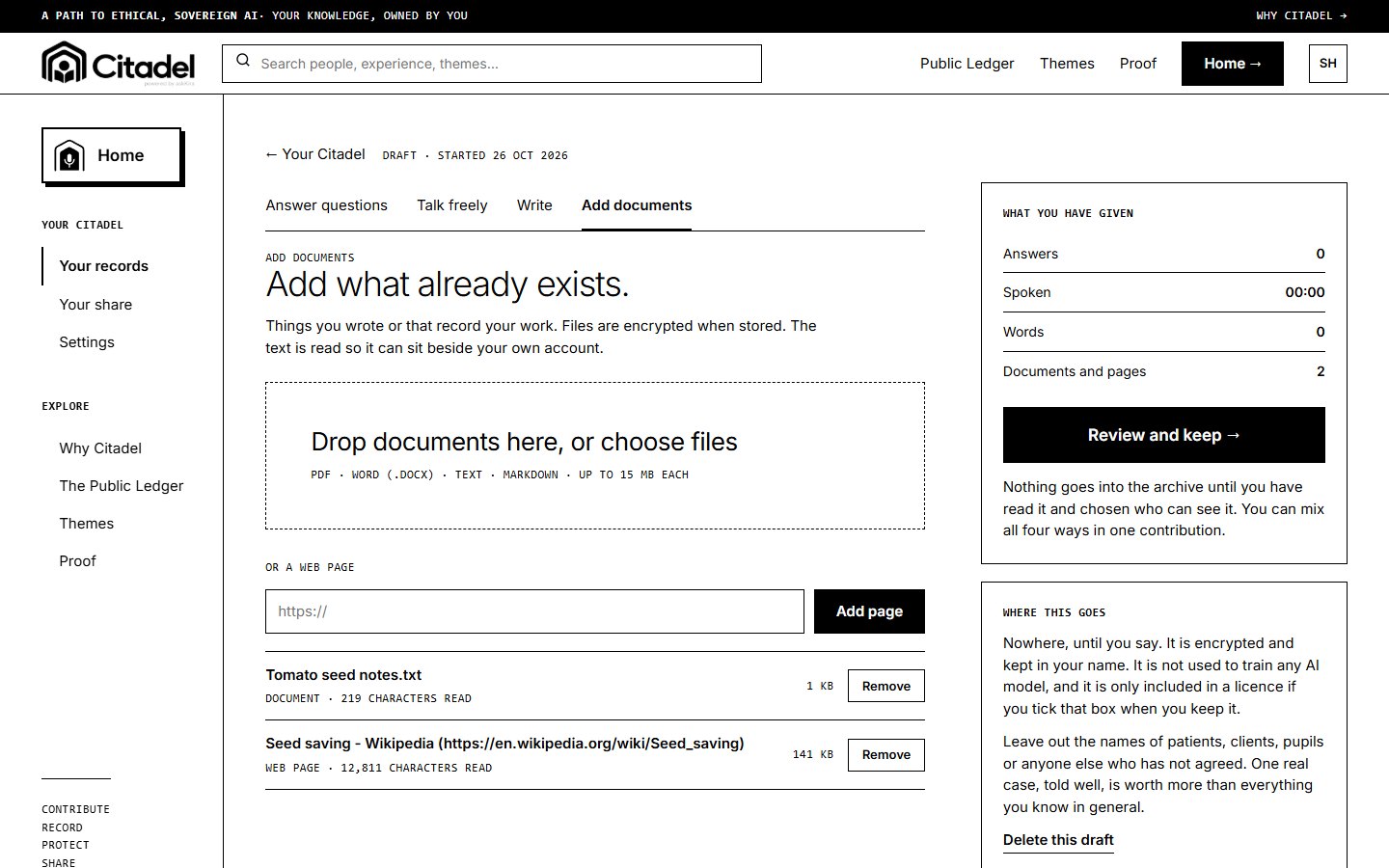
Talk freely, type, or add the notes and documents you already have.
No questions if you would rather just talk: press once and keep going. Type instead of speaking. Add your notes, guides, PDFs and Word documents, or a web page, and they are kept, encrypted, beside what you said about them.
A record
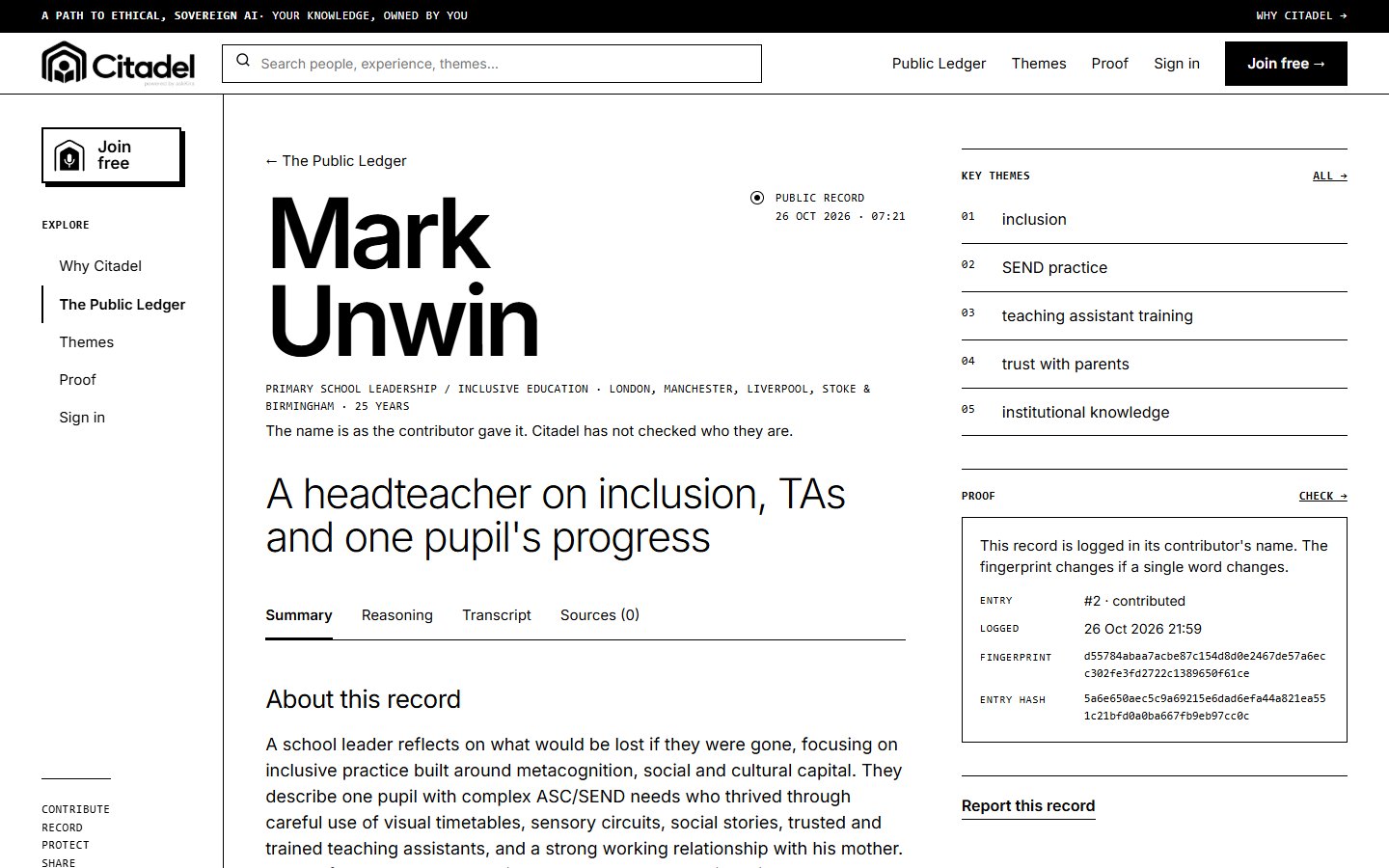
Every record is kept in your name, with proof it is yours.
Every record shows who gave it, when, the themes it covers and its fingerprint on the ledger, so you can prove it is yours. This one is real: Mark Unwin on inclusion, teaching assistants and one pupil’s progress.
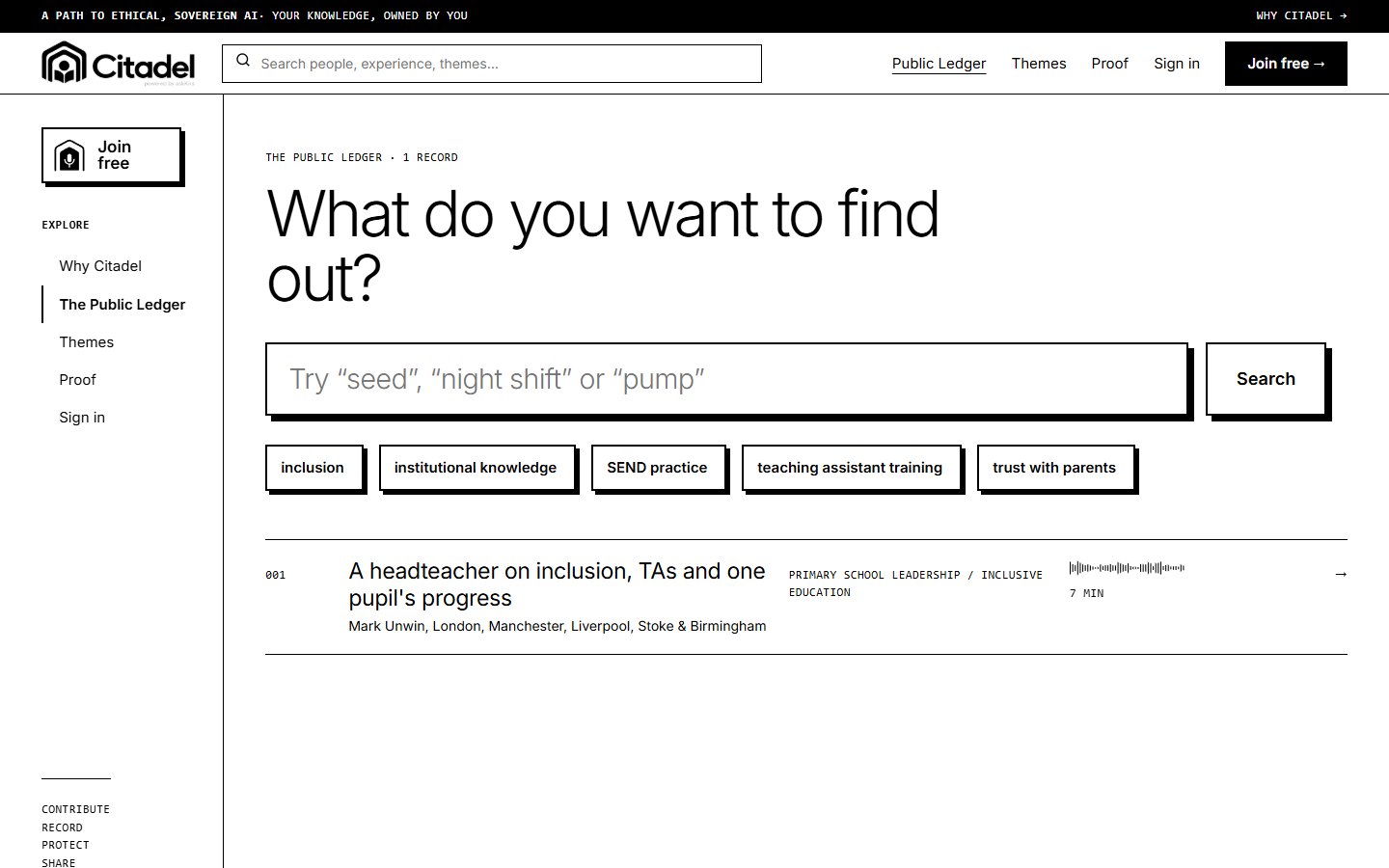
The Public Ledger
Find and listen to what people have shared.
Search by subject or press a topic. A person checks every public record before it appears, and records with a voice can be played back.
How it works
Record what you know in three steps and ten minutes.
01
Answer questions
Citadel asks one question at a time and you answer out loud or by typing. It keeps asking until what you know, and why, is down: “When did that last happen? What did you notice first?”
02
Check what was written
Your voice is turned into text on askKira’s own server in the UK. Citadel drafts a title and the reasoning from your words only, and you change anything.
03
Keep it, in your name
It goes on the ledger with your member number, the date and a fingerprint of exactly what you said. It stays private unless you share it, and a person checks it before it goes public.
What we promise
What you record stays yours, under your control.
AI companies cannot take it.
Only you can see what you give unless you choose to share it. Everything you say, write and upload is encrypted, and it is only ever licensed if you tick a box saying it can be.
You can prove it is yours.
Every record is stamped with your member number, the date and a fingerprint of exactly what you said, on a ledger where any change shows. You can download your own copy.
If they want it, they pay you.Planned
Citadel is planned as a co-operative, like the Rochdale Pioneers who opened a shop owned by its customers in 1844. Members decide which companies can license the archive and on what terms, and the money goes to the people who gave the knowledge.
It survives if things go wrong.Planned
A copy kept offline, somewhere safe from floods. Some people keep a wind-up radio for emergencies. This is the same instinct, for what we know.
You will not be doing it alone.Planned
Members meeting in person to record each other’s experience and help newcomers start.
Together
Members will meet to pass on what they know, face to face.
Members will meet in person. People who want to learn ask the questions, people who know answer them, and everything said is recorded and kept in the speaker’s name.
It is easier to explain what you know to someone who wants to know it.
Record it before it is lost.
Free. Private until you choose to share it.